


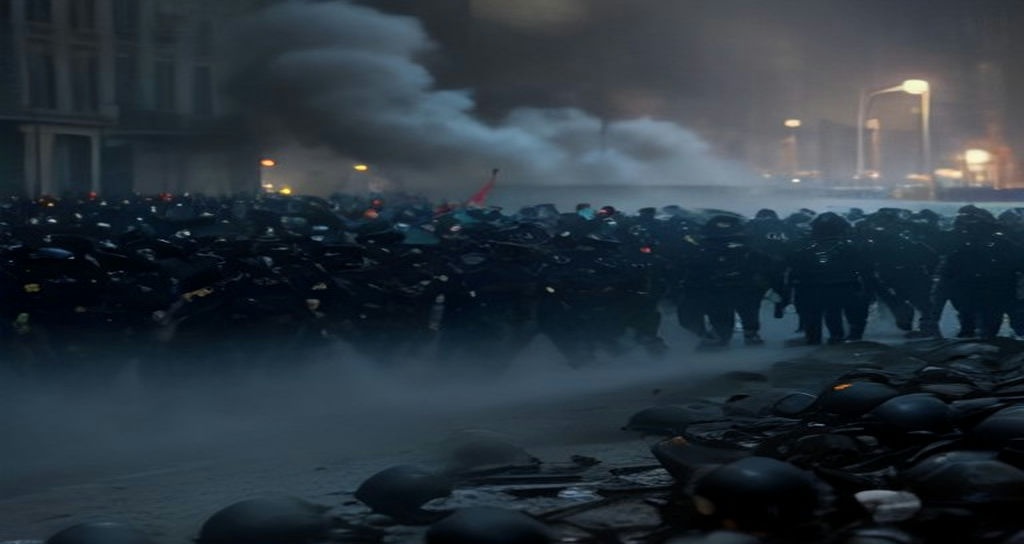

France Imposes Overnight Curfews in Paris Suburbs and Nice Amid Widening Civil Unrest
Key Takeaways
- Municipal leaders across suburban Paris and selected quarters of Nice have instituted strict nighttime curfews in response to multiple nights of destructive unrest.
- The widespread demonstrations were ignited by the fatal police shooting of a teenager in the western Paris suburb of Nanterre.
- Over 40,000 law enforcement officers have been mobilized nationwide as public transit faces early evening shutdowns to prevent further escalation.
Emergency Nighttime Restrictions Enacted in Key Urban Centers
In an urgent bid to stem spiraling street violence and safeguard public infrastructure, regional officials in France have instituted nocturnal curfews across several municipalities surrounding Paris, alongside targeted restrictions in the southern resort city of Nice. According to reporting from the BBC, the exceptional measures follow multiple consecutive nights of arson, commercial looting, and direct confrontations between law enforcement and localized youth groups across the country.
In municipalities such as Clamart and Neuilly-sur-Marne, civic authorities decreed that residents must remain indoors between the late evening hours and early morning. The restrictions were mirrored in parts of Nice, where municipal officials moved to limit nocturnal movement after storefronts were vandalized and public vehicles set ablaze. Government officials emphasized that the curfews are designed to separate peaceful citizens from organized groups intent on widespread destruction.
SPONSORED ADVERTISEMENT
Root Causes: Fatal Traffic Stop Sparks Deep-Seated Outrage
The catalytic event behind the current wave of unrest occurred earlier in the week in the working-class suburb of Nanterre, where a 17-year-old motorist identified as Nahel M. was fatally shot by an officer during a routine traffic stop. Video footage capturing the encounter quickly circulated across social media platforms, contradicting early police accounts and triggering immediate outrage across marginalized suburban housing projects, known locally as the banlieues.
The incident has revived longstanding grievances concerning police conduct, allegations of institutional discrimination, and the socio-economic isolation experienced by urban youth in France’s post-war periphery. Wire dispatches from Reuters indicate that although the police officer involved has been placed under formal investigation for voluntary homicide, demonstrations rapidly transitioned from peaceful vigils into coordinated attacks against municipal buildings, police barracks, and public transport hubs.
SPONSORED ADVERTISEMENT
Government Mobilization and Widespread Transit Closures
French President Emmanuel Macron has convened multiple interministerial emergency sessions to coordinate the central administration’s response. While resisting demands from right-leaning political factions to implement a nationwide state of emergency, the Ministry of the Interior directed the nationwide deployment of 45,000 police officers and gendarmes, bolstered by light armored vehicles and tactical units.
To curtail mobility among roving groups of demonstrators, surface public transport systems – including trams and commuter buses – were ordered to suspend operations nationwide well before sundown. Major summer festivals, cultural gatherings, and public events were simultaneously canceled in several metropolitan districts to alleviate strain on civil defense forces.
Societal Impact and Economic Repercussions
The economic toll continues to mount as commercial associations report extensive damage to hundreds of retail outlets, banks, and grocery chains. International travel advisories issued by allied nations have raised alarms within the hospitality sector, which had been anticipating a robust summer tourism season. Business federations have formally requested emergency financial mitigation packages to assist proprietors impacted by the vandalism.
SPONSORED ADVERTISEMENT
Frequently Asked Questions
Which jurisdictions are enforcing curfews in France?
Temporary overnight curfews have been declared on a municipal basis, prominently affecting areas around Paris such as Clamart and Neuilly-sur-Marne, alongside select sectors of Nice. Decisions remain localized rather than part of a unified nationwide declaration.
Are public transportation networks operating normally?
Surface transport networks, specifically public bus routes and tramways across major French metropolitan areas, have faced early evening shutdowns ordered by the Interior Ministry to preserve public order and protect transit personnel.
Reported by Creek Observer Editorial Desk. Sourced and verified from public news dispatches including BBC. Published in accordance with fair reporting and public interest standards.